Exclusive Interview
N1,000 Transport Support Boosts Vaccination As Nigeria Battles Zero- Dose Gap
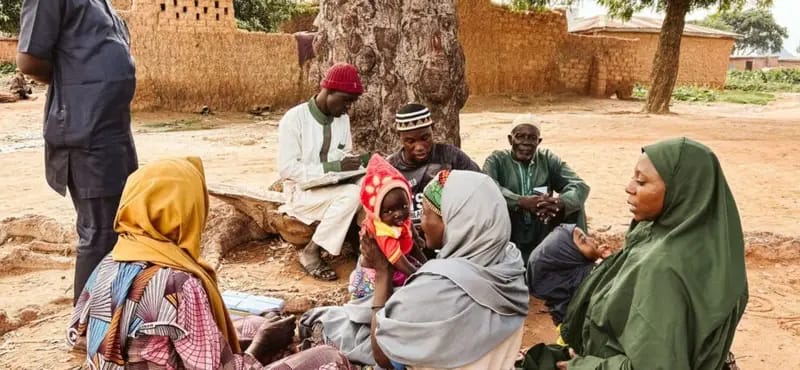
N1,000 Transport Support Boosts Vaccination As Nigeria Battles Zero- Dose Gap
By: Umar Faruk
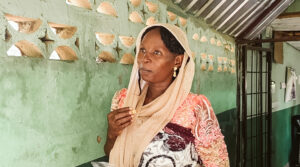
For Joy, taking her 3-month-old baby for routine immunisation is non-negotiable. But on some mornings, reaching the clinic feels impossible.
"Sometimes I wake up and I have nothing in my pocket, and it is my baby’s vaccination day," Joy said.
"I live about nine miles from the nearest health facility. Walking for three hours there and three hours back under the hot sun is not good for me or my baby, especially with postpartum challenges."
Joy’s story mirrors that of many nursing mothers in underserved communities. With household costs rising, transport fare is often the first thing dropped. And missed appointments quickly turn into missed vaccines.
That changed for her after enrolling in the All Babies Are Equal programme, NI-ABAE, run by New Incentives.
HOW A SMALL PAYMENT IS CHANGING BEHAVIOUR
 After reviewing data from health facilities in hard-to-reach areas, NI-ABAE identified two major barriers: distance to clinics and lack of money for transport.
In response, the programme gives eligible caregivers N1,000 after each vaccination visit. An additional N5,000 livelihood grant is paid when a child completes all routine doses.
"That money is a blessing and a relief," Joy said.
"We use it to come to the hospital. Now I don’t worry on days when I have nothing. I know I’ll have something for transport."
Joy added that other mothers who previously stayed away from clinics have started coming since hearing about the support. "The incentive has helped caregivers stay committed, even when they worry about post-vaccination reactions or other family expenses," she said.
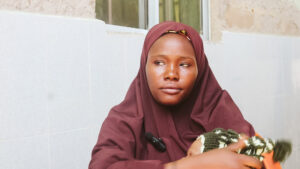
Another beneficiary, Asma’u Abubakar, mother of four, said the support helps cover costs tied to clinic visits.
"I have seen more mothers at the facility lately. It shows the intervention is working and encouraging parents to vaccinate their children," Asma’u said.
THE PROBLEM: IT’S NOT JUST ABOUT VACCINE SUPPLY
Nigeria still struggles to reach children who have received zero routine vaccines. Dr. Garba Rufai, Director of Disease Control and Immunisation at the National Primary Health Care Development Agency, NPHCDA, said the challenge has many layers.
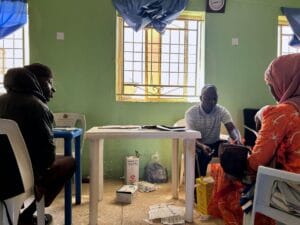
"The problem is multifaceted. It includes geography, poverty, insecurity, vaccine hesitancy and weaknesses in the health system," Dr. Rufai said. "Some children live in communities that are difficult to reach because of distance, poor roads, and insecurity."
He added that misinformation also keeps children out of clinics. "To address this, we are working with traditional and religious leaders, women’s groups, community structures, and radio programmes to build understanding and demand for vaccines," he said.
According to Dr. Rufai, "zero-dose" children are those who have not received the first dose of the pentavalent vaccine at the age they should have started routine immunisation.
"They are the most vulnerable to vaccine-preventable diseases. Reaching them is one of our top priorities," he said.
Muhammad Awwal, Kaduna State Programme Lead at Chigari Foundation, said both supply and demand issues are at play.
"We have remote settlements, insecurity, poverty, misinformation, cultural beliefs, poor infrastructure and sometimes health worker attitude affecting uptake," Awwal said.
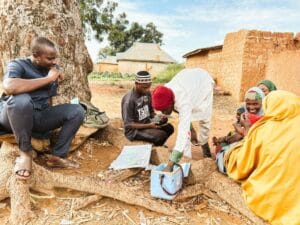
"We engage traditional rulers, religious leaders, community influencers and government structures to improve access and demand.""Community leaders are critical because they shape opinions on vaccination and help health workers enter communities where trust is low," he added. "Some caregivers also see the cash support as a safety net to cover transport when household income is tight."
WHY CASH INCENTIVES WORK
Mubarak Bawa, Operations Director at New Incentives, said the organisation started NI-ABAE in 2021 after identifying practical barriers that stop caregivers from completing immunisation schedules.
"These include transport cost, time spent travelling, loss of income, limited awareness of schedules, and misconceptions about vaccines," Bawa said.
"Evidence shows small incentives can increase uptake of preventive health services."
He explained the model: "The NI-ABAE programme provides N1,000 to eligible caregivers at each vaccination visit. We also provide a N5,000 livelihood grant after completion of all routine visits." As of June 2026, the programme operates in 11 states: Sokoto, Kebbi, Zamfara, Katsina, Kano, Kaduna, Jigawa, Yobe, Gombe, Bauchi and Niger.
"More than 7,000 clinics are covered. Over 7.1 million infants are enrolled. More than 7,200 government clinics are involved. Over N45 billion has been disbursed," Bawa said.
"Our data shows the programme has encouraged more than 110 million vaccinations. An independent randomised controlled trial found it doubled full vaccination rates in the communities studied."
Bawa stressed that cash alone is not the strategy.
"We combine incentives with awareness campaigns, community engagement and collaboration with government agencies and health workers," he said.
"Our long-term goal is for caregivers to continue seeking vaccination because they understand it is essential for child health, not just because of incentives."
In Sokoto, where the programme started in 2021, Bawa said Q4 2025 survey data showed increases in BCG, Penta 1 and MCV 1 coverage compared to pre-programme figures.
"We have also recorded a reduction in zero-dose children in our areas of operation in the state," he said.
WHAT STILL NEEDS FIXING
While household surveys show improved uptake, experts warn that incentives cannot solve everything.
Dr. Rufai described financial support as a "stop-gap" measure.
"Sustainable coverage requires adequate health workers, reliable vaccine supply, functional cold chain, funding for logistics, and proper community planning," he said.
"Communities must also be involved in deciding when and how vaccination services are delivered."
Caregivers say N1,000 helps with immediate transport, and N5,000 encourages completion. But challenges remain.
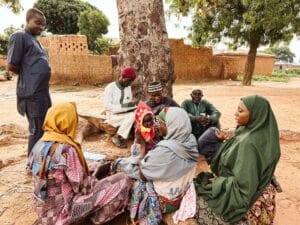 Some parents live too far for N1,000 to cover the trip. Others are in areas health teams cannot easily access. Some face resistance or misinformation from relatives.
"Improving coverage means more than asking parents to come to clinics," Dr. Rufai said.
"We must bring services closer, build trust, improve health worker engagement, and ensure vaccines are available when caregivers arrive."

0 Comments
Be the first to comment on this story.