Education
ABU VC Urges Academia to Embrace Knowledge, AI to Tackle Future Challenges
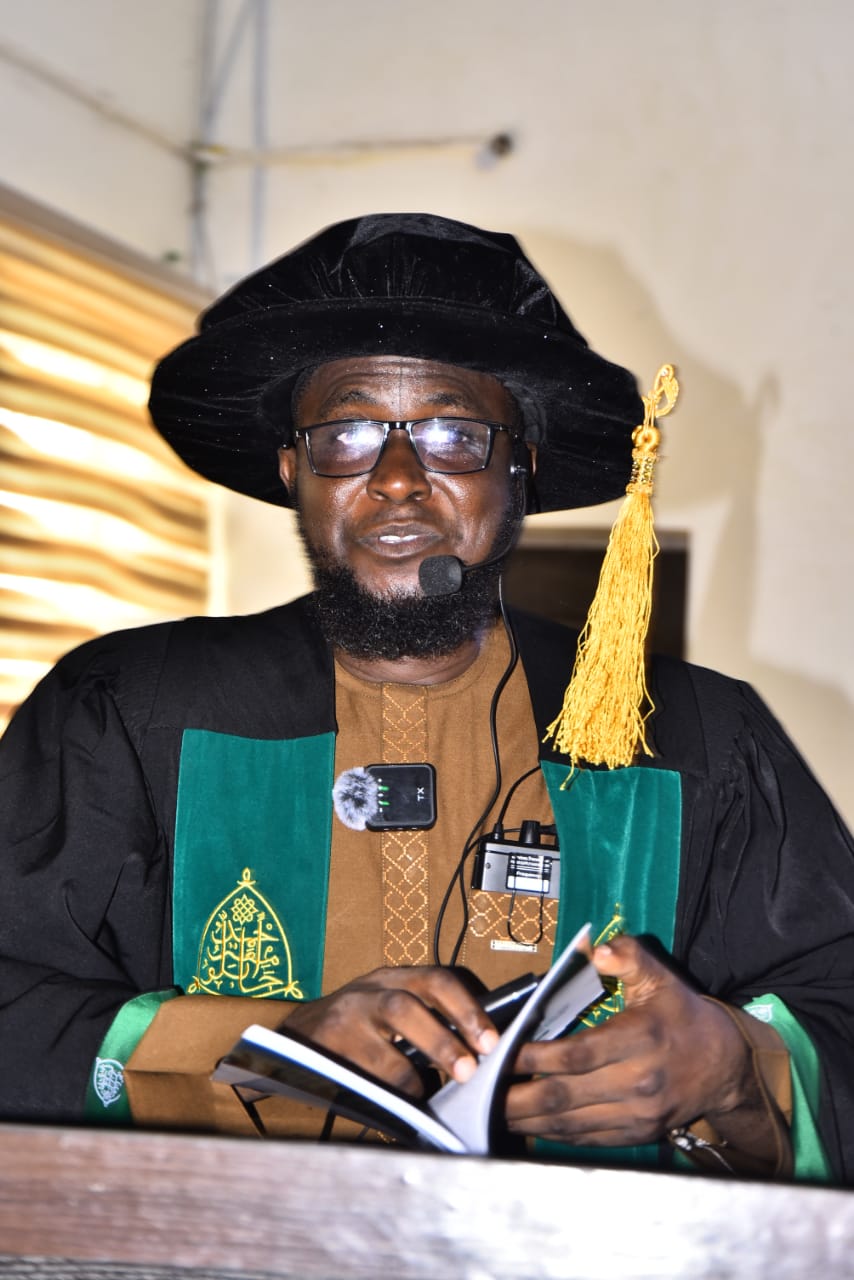
ABU VC Urges Academia to Embrace Knowledge, AI to Tackle Future Challenges
By Jibirin Zaria
The Vice-Chancellor of Ahmadu Bello University, Zaria, Professor Adamu Ahmed, has urged stakeholders in the education sector to place greater emphasis on knowledge generation and innovation as essential tools for preparing the next generation to tackle national and global challenges.
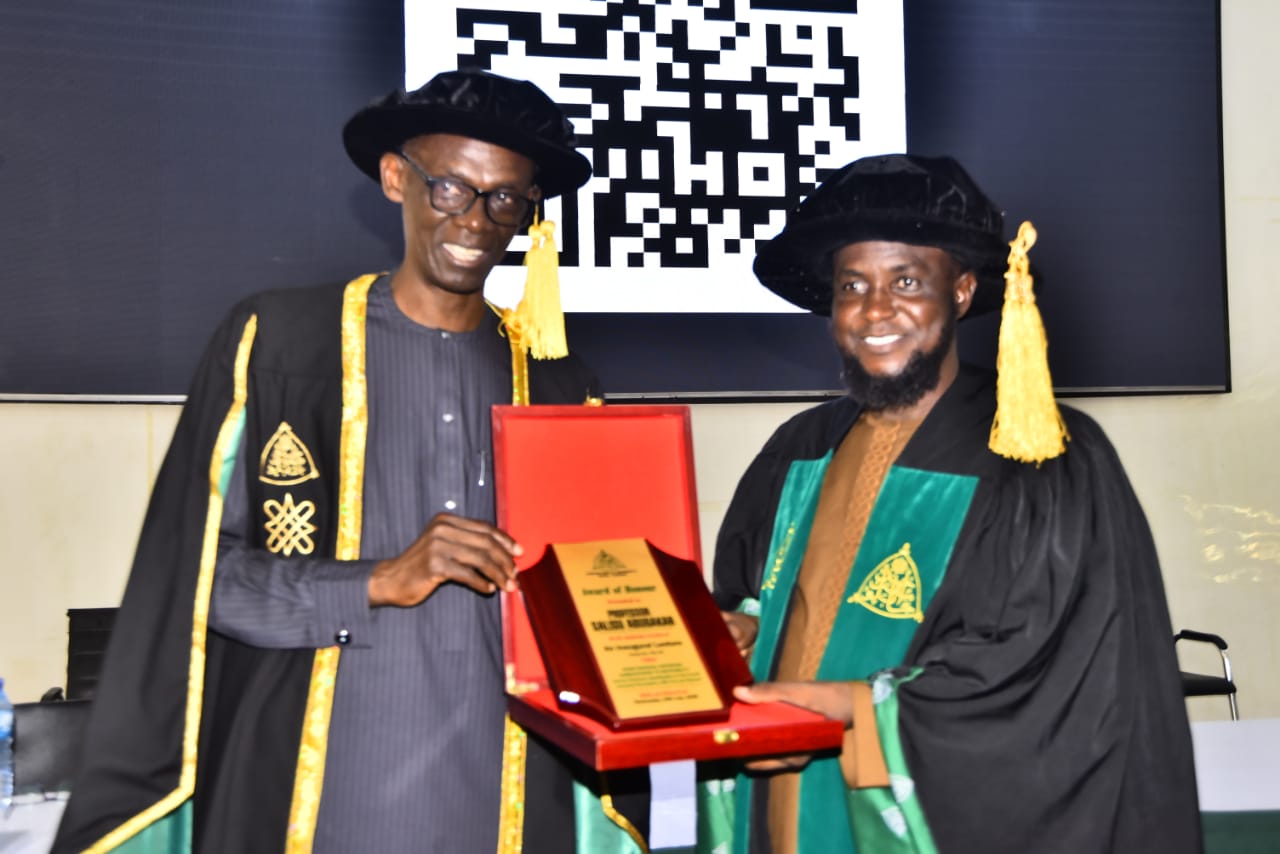
Professor Ahmed made the call on Wednesday, 13th August 2026, while declaring open the 5th Inaugural Lecture of the University delivered by Professor Salisu Abubakar of the Department of Accounting, Finance and Financial Reporting.
Speaking at Yusufu Bala Usman Hall, the Vice-Chancellor said the current global economy is being shaped by ideas rather than physical resources. “In today’s knowledge economy, value creation is increasingly driven by knowledge, creativity, innovation, experience and, most importantly, people,” Ahmed said.
He added that institutions must adapt quickly to remain relevant.
 The Vice-Chancellor noted that the Fourth Industrial Revolution, powered by Artificial Intelligence, automation and robotics, is fundamentally changing industries and the skills required for the workforce. “The Fourth Industrial Revolution is rapidly transforming industries and redefining the skills required for the future,” he said.
“Therefore, the academic community must embrace Artificial Intelligence and adapt our teaching methods to equip students with the knowledge and skills needed for a changing world,” he urged.
Professor Ahmed also stressed the need for continuous human resource development and sensitisation.
“We must create value and develop solutions capable of addressing emerging global challenges,” he stated.
Delivering the lecture titled “From Financial Reporting Gobbledygook To Inevitability: Human Resource Assetization In The Fourth Industrial Revolution (4IR) Era And Beyond”, Professor Salisu Abubakar said the world has moved from the information age into a knowledge-based era, which birthed the Fourth Industrial Revolution.
According to him, the transformation is already evolving toward a Fifth Era, driven by the rapid growth of service-based companies compared to the slower growth of manufacturing.
“The world has transformed from an information era to a knowledge-based era, which led to the Fourth Industrial Revolution,” Abubakar said.
“This transformation is fast evolving to another era, the Fifth Era, as service-oriented companies are increasing geometrically compared to the arithmetic growth of manufacturing businesses,” he explained.
The professor of Accounting and Financial Reporting said the shift poses significant challenges for the accounting profession. “This reason has posed great challenges to accountants in responding adequately to the new transformation,” he said.
“In responding to the challenges, accountants have had to expand the scope of the discipline and become more innovative and inventive,” he added.
Professor Abubakar identified Human Resource Accounting as one of the key innovations emerging from the accounting discipline. He argued that the formal adoption of Human Resource Accounting in financial reporting is now inevitable. “The formal adoption of Human Resource Accounting in Financial Reporting is no longer a question,” he said.
“The boundary between technology and traditional accounting metrics will continue to lose relevance if they remain anchored solely to the material world,” he warned.
He recommended a multi-level approach to move Human Resource Accounting from theory to practice during the 4IR and beyond. At the academic and professional level, he advised that future professionals must be equipped with the right tools. “The professional of tomorrow must be equipped with multidisciplinary tools required to audit and manage human asset data,” Abubakar said.
The lecture attracted academics, students and stakeholders from within and outside the university community.
End.

0 Comments
Be the first to comment on this story.